Customer-Support
10 Best AI Voice Agents for Ecommerce Customer Support



Premium Humanoid AI Voice Agents for your business.
Ecommerce support teams are under more pressure than ever. Customers call about urgent issues. These include missing orders, late deliveries, and failed payments. They also ask about refunds, return requests, damaged packages, and worries after buying.
Helpdesks, live chat, and chatbots help reduce some of this pressure, but they do not fully replace phone support.
When customers want an immediate answer, many still prefer to call. The problem is that most ecommerce phone calls are repetitive, time-sensitive, and difficult to staff around the clock.
That is why more brands are comparing the best AI voice agents for ecommerce customer support.
The right AI voice agent for ecommerce can:
Answer calls
Understand customer intent
Provide useful responses
Trigger workflows
Escalate complex cases to human agents when needed
For brands dealing with repetitive phone queries, AI voice agents for ecommerce customer support can help automate routine calls while keeping human agents focused on complex cases.
In this post, you’ll discover how to compare top AI voice agents for ecommerce. You’ll learn about key features for customer support calls and find out which tools suit various ecommerce support needs.
An AI voice agent for ecommerce support is a voice-based system. It can make and receive calls. It understands customer questions, responds naturally, and takes actions related to support.
In ecommerce, an AI voice agent may help with:
Order status calls
Delivery questions
Return and refund updates
Product questions
Failed delivery issues
After-hours support
Missed call handling
Escalation to a human support agent
The best AI voice agents for ecommerce are not just “talking bots.” They are workflow systems. They need to connect conversations with ecommerce operations. They also need to link support tools, CRM records, helpdesk notes, escalation rules, and post-call analytics.
Ecommerce brands are adopting AI voice agents because phone support can be repetitive, costly, and difficult to manage at scale.
Most ecommerce support calls are not complex.
Customers often want to know:
Where their order is
When will a refund arrive
If a return is approved
How to exchange a product
What does a policy mean
These questions matter, but they do not always require a human agent.
AI voice agents help ecommerce teams by:
Answering repetitive support calls
Reducing missed calls after business hours
Supporting customers during sale-period spikes
Giving consistent answers across calls
Reducing agent burnout
Freeing human agents from emotional or complex issues
This is where ecommerce customer support automation becomes practical. Instead of trying to replace the entire support team, AI voice agents remove repetitive phone workload from the team.
For a deeper look at this problem, read how ecommerce brands can scale customer support without adding more agents.
The best AI voice agents for ecommerce customer support should be evaluated on workflow fit, not only voice quality.
Look for:
E-commerce support call fit
Order and delivery workflow support
Return and refund handling
Human-like voice quality
Low latency
CRM, helpdesk, and ecommerce integrations
Human handoff
Post-call workflow actions
Multilingual and local accent handling
Analytics, summaries, and call outcomes
Scalability during peak periods
A natural voice matters, but it is not enough. The agent also needs to resolve real support intents safely and know when to transfer a customer to a human.
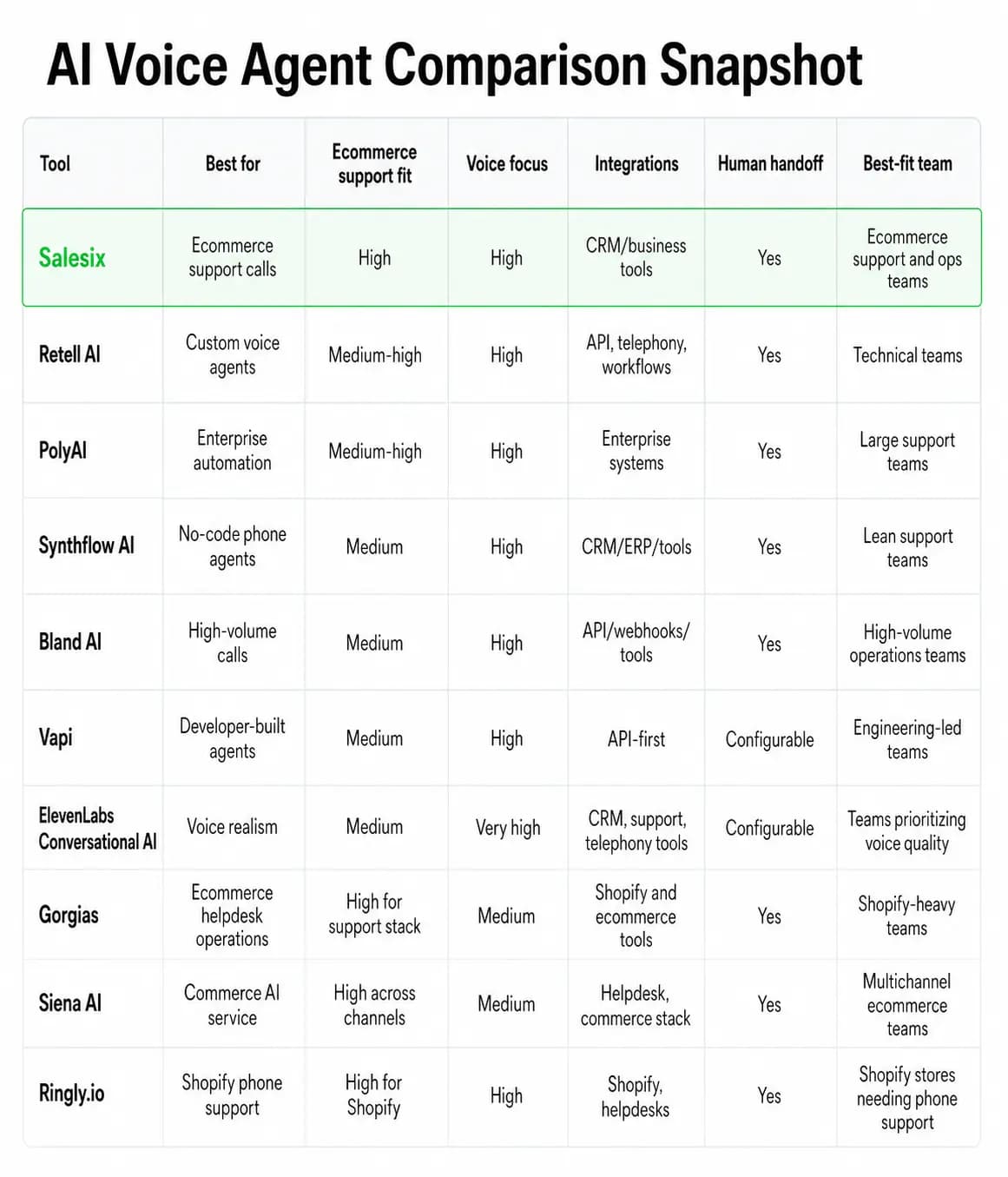
10 best AI voice agents for ecommerce customer support
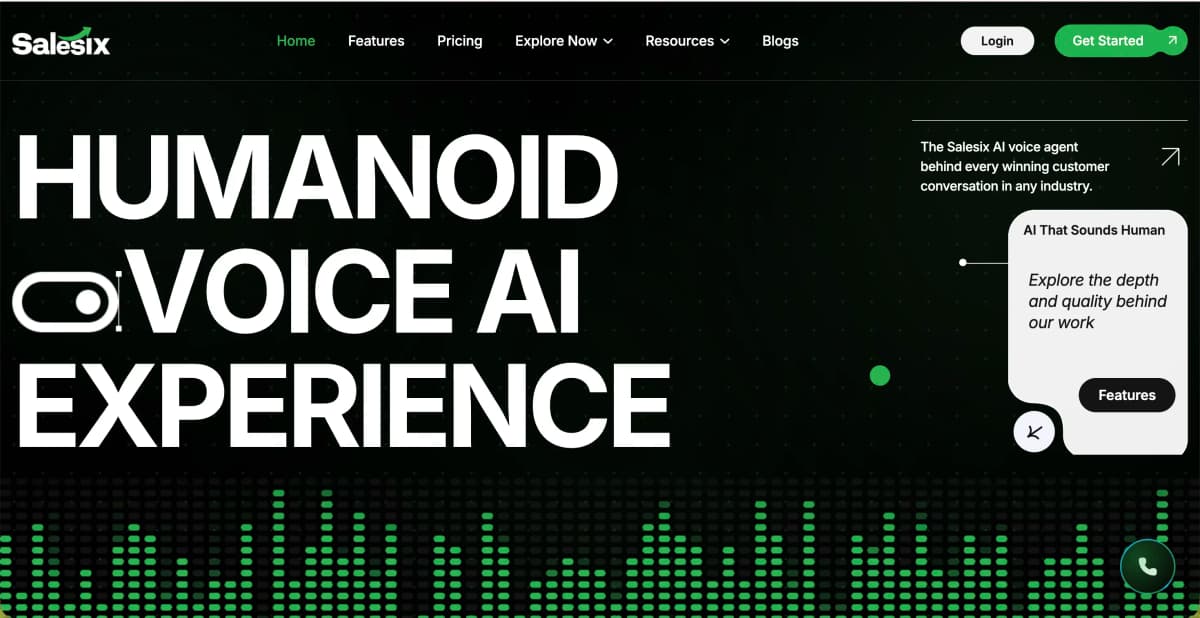
Salesix AI is a great choice for ecommerce brands. It automates phone support while keeping conversations engaging. Customers won’t feel like they’re talking to a simple bot.
It’s made for both inbound and outbound support calls.
Ecommerce teams can use it to:
Answer customer questions
Follow up on issues
Manage routine chats
Provide support outside business hours
For ecommerce customer support, this is useful because many phone calls are repetitive but still important. Customers may call to ask:
Where is my order?
Why is my delivery delayed?
Am I eligible for a return?
When will I get my refund?
What happened to my failed delivery?
Salesix can automatically manage routine support calls. It syncs call details with CRM or business tools. It also provides post-call analytics. For complex cases, it transfers them to a human agent when needed.
This is great for ecommerce brands. It helps reduce repetitive phone tasks. This way, human agents can focus on exceptions, angry customers, high-value cases, or issues needing judgment.
Best for: Ecommerce brands that want AI voice agents for real support calls, not only chatbots or ticket automation.
Limitations: Salesix works best when the team clearly defines:
Support workflows
Escalation rules
Expected call outcomes
Actions to take after each call
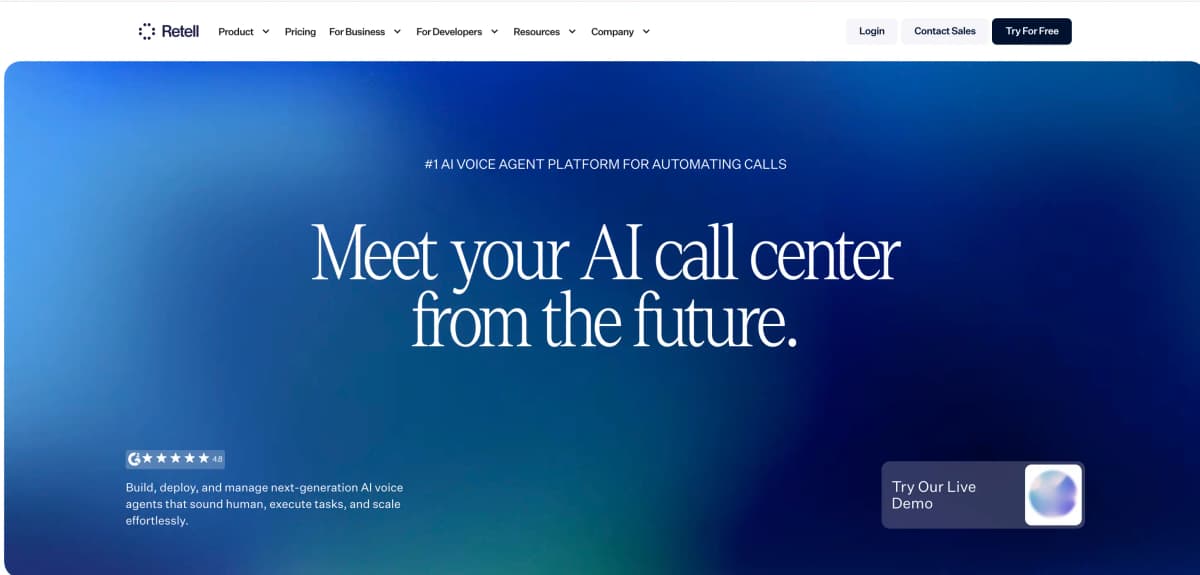
Retell AI is a good choice for ecommerce teams that want more control over how their AI phone agents sound, respond, and behave during support calls.
It’s made for teams that want to create custom voice agents. It provides low-latency conversations. You get call-flow control, testing tools, deployment features, and performance monitoring.
For ecommerce customer support, this helps the team design call experiences. They can focus on different situations. These include order questions, delivery updates, return requests, refund timelines, and escalation rules.
Retell AI is especially suitable when the business has technical resources available. A team can customize how the agent responds, what data it uses, when it triggers actions, and when it transfers the customer to a human agent.
Best for: Technical teams that want to build and customize advanced AI voice agents for support calls.
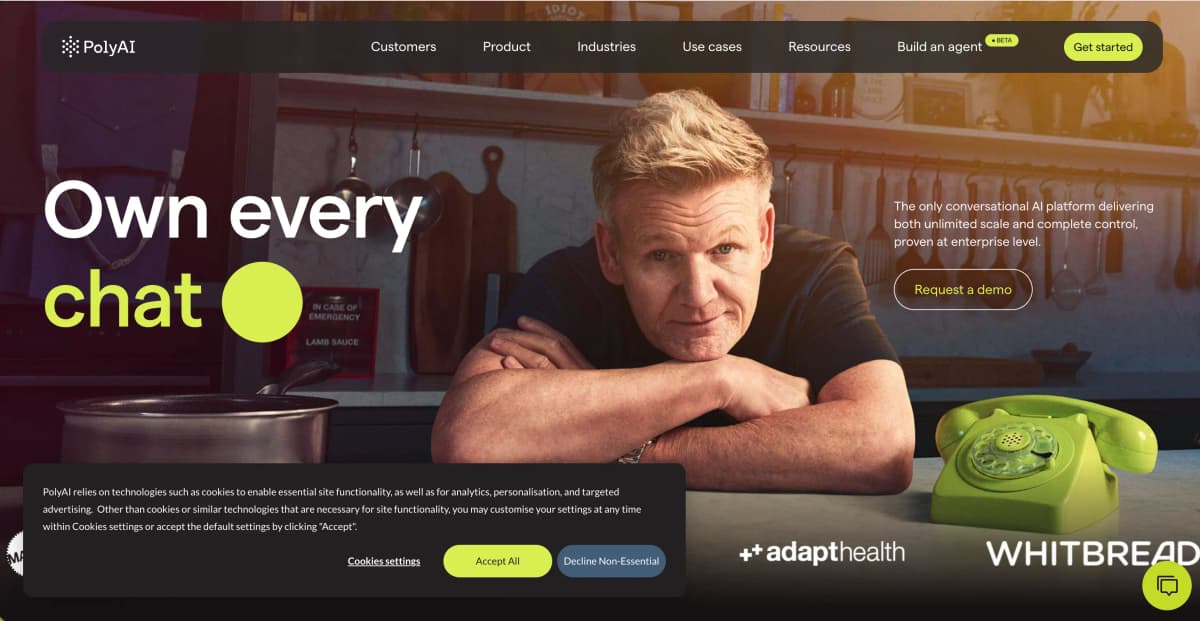
PolyAI is built for large-scale conversational AI across customer service environments. It focuses on enterprise-scale features.
It includes omnichannel deployment, monitoring, and tech-stack links. It also offers automatic scaling during spikes, policy control, and escalation rules.
PolyAI is great for larger ecommerce and retail businesses. It works well in complex support situations. It helps with call routing and troubleshooting. It also ensures consistent service, even with high volumes.
Best for: Enterprise ecommerce or retail operations with mature support infrastructure.
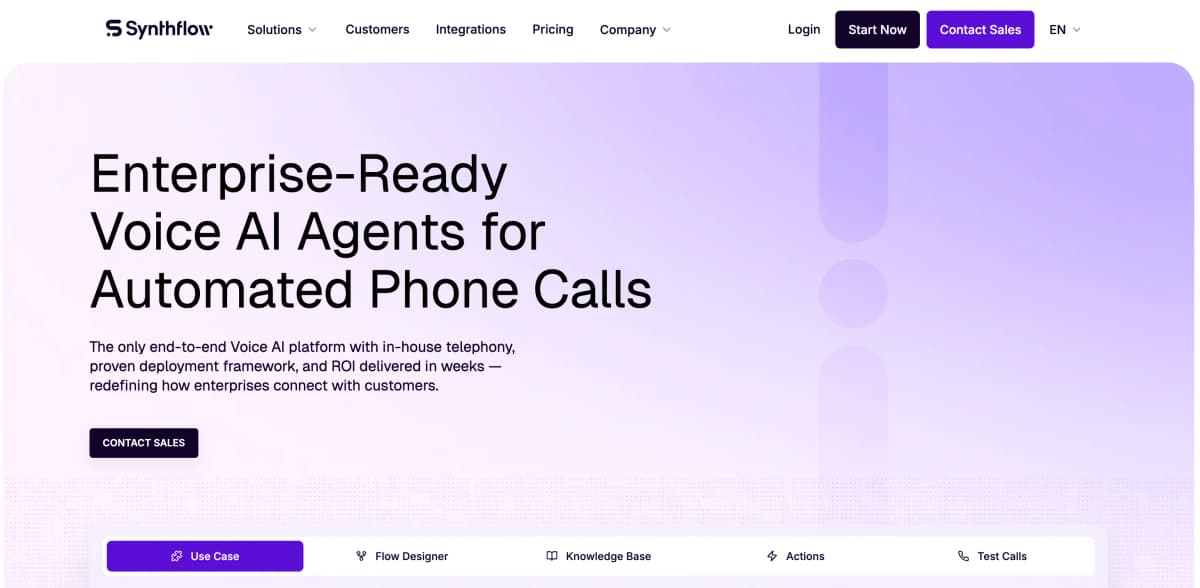
Synthflow AI is a no-code voice AI platform for automating inbound and outbound phone calls. It supports call answering, routes calls, and books appointments.
It detects voicemails and sends SMS follow-ups, handles multilingual calls, and It integrates with CRM and ERP systems.
For ecommerce support teams, Synthflow helps when quick deployment is key. It also saves the team from heavy engineering work.
Best for: Ecommerce teams testing voice automation without a large technical build.
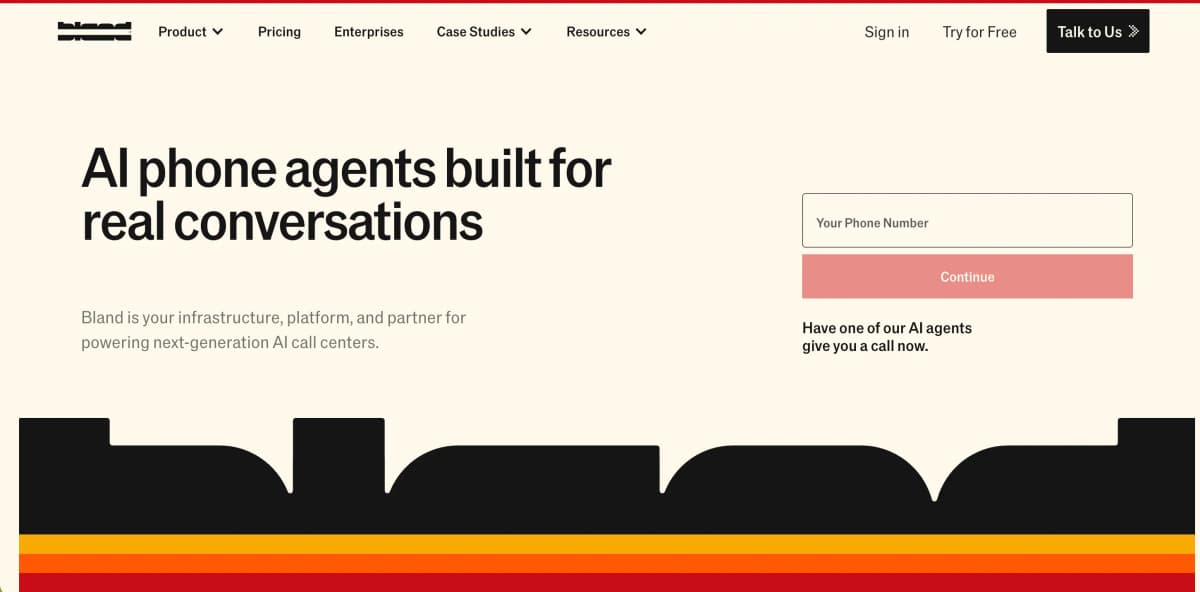
Bland AI focuses on automating phone calls at scale.
Its platform supports:
Building phone agents
Inbound call handling
Outbound workflows
Batch calls
APIs
Webhooks
Guardrails
Human handoff
Call recording
Transcript analysis
It also integrates with tools like Salesforce, HubSpot, Slack, Twilio, Zapier, and Amazon Connect.
For ecommerce, Bland is helpful when there's a high call volume in customer support, operations, or outbound follow-up tasks.
Best for: Brands with large support or operational calling volume.

Vapi is a developer-first platform for building voice AI agents. It presents itself as an API-first platform for voice AI products and scalable phone operations. It supports both inbound and outbound use cases.
Vapi offers ecommerce teams with engineering resources the chance to create a custom AI phone support system. This system can fit their internal workflows, data sources, and business logic.
Best for: Engineering-led ecommerce teams or agencies building custom AI phone agents.
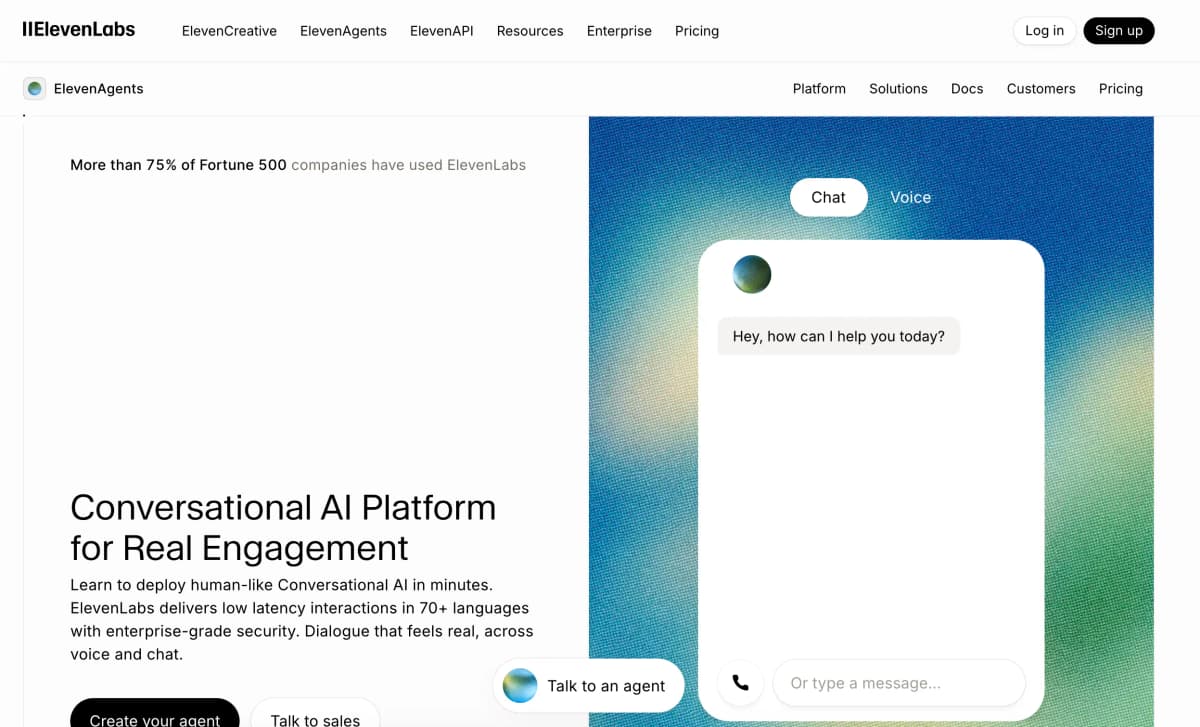
ElevenLabs Conversational AI is a smart choice. It offers realistic voices, supports many languages, and ensures fast voice interactions.
Its platform supports voice and chat. It also includes knowledge configuration, procedures, workflows, escalation paths, and dashboard monitoring. It caters to retail and ecommerce needs.
The platform works in 70+ languages and integrates with tools like Zendesk, HubSpot, Stripe, Twilio, and Zapier.
For ecommerce, ElevenLabs is key when voice quality and brand tone shape the customer experience.
Best for: Teams prioritizing realistic voice and custom conversational experiences.
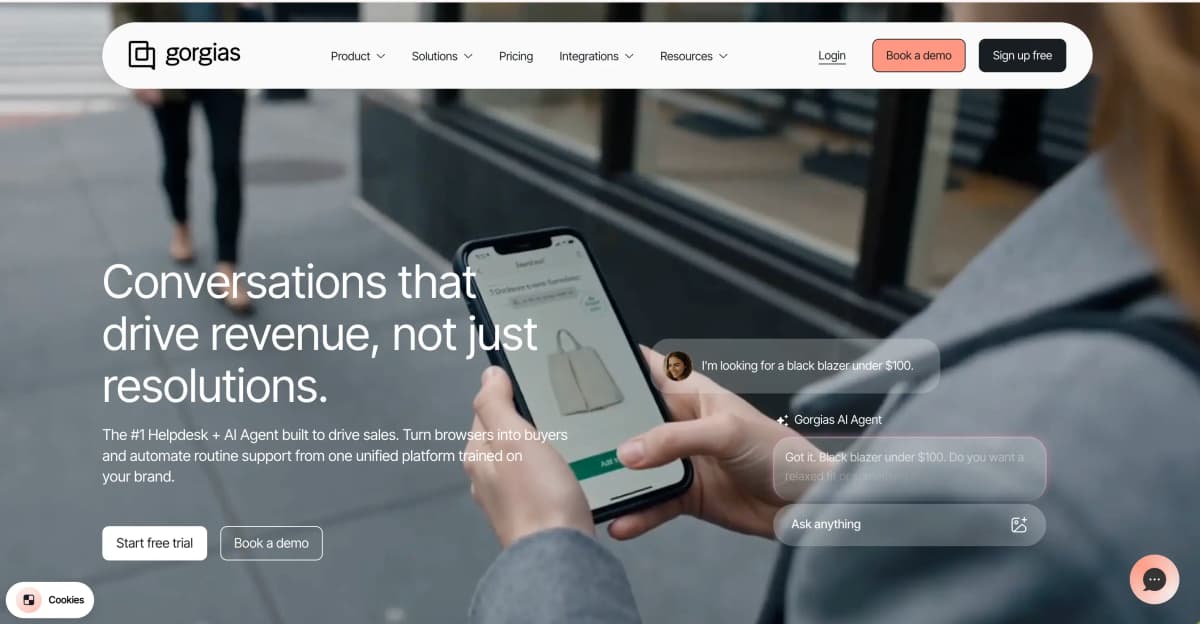
Gorgias is not purely an AI voice agent platform, but it belongs in the ecommerce support stack conversation.
It provides an ecommerce helpdesk, AI Agent, and support automation. You can also get phone support through the helpdesk, SMS, and Shopify context. Plus, it integrates with over 100 ecommerce tools.
For Shopify-heavy teams, Gorgias is useful. It helps with centralised ecommerce support. This is better than just having a standalone voice agent.
Best for: Shopify teams that need helpdesk operations, customer context, and support automation.
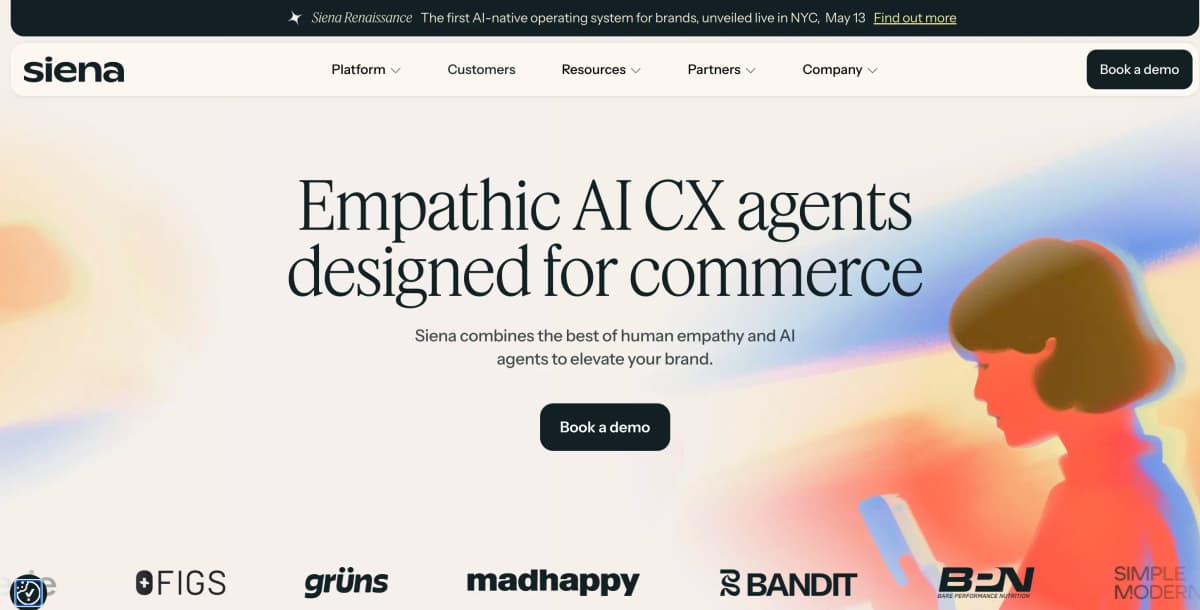
Siena AI is built for commerce-focused customer service automation. It connects to the helpdesk, commerce stack, and customer data, supports commerce-specific workflows, order tracking, post-purchase workflows, refunds, replacements, subscriptions, and customer engagement across channels.
For ecommerce brands, Siena is a strong option when the goal is broader AI customer service across multiple CX channels, not only phone support.
Best for: Ecommerce brands that want AI support across the customer journey.
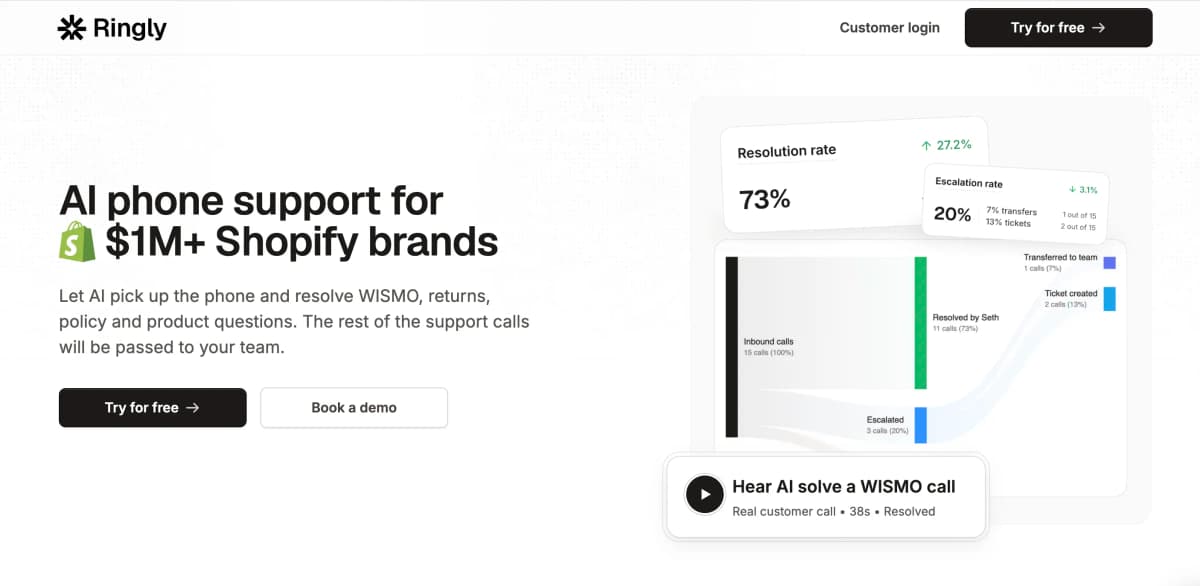
Ringly.io is focused on AI phone support for Shopify brands. Its AI agent can connect to Shopify. It can check order status, provide tracking info, and answer product questions.
It also checks return eligibility and requests returns in Shopify. Plus, it can transfer calls to the team and escalate issues into helpdesk workflows.
For Shopify stores that specifically want AI phone support for order, product, and return calls, Ringly is a focused option.
Best for: Shopify brands that want ecommerce phone support automation quickly.
The right choice depends on the support problem you are trying to solve. Some tools work best for ecommerce phone support. Others excel at custom technical builds. Then, some suit broader customer service automation.
Here is the easiest way to decide:
In simple terms, choose Salesix if your main goal is to automate ecommerce support calls. Choose Retell AI or Vapi if you want to build something custom.
Choose Gorgias or Siena AI if your priority is broader ecommerce support automation. And choose Ringly.io if you need a Shopify-focused AI phone support tool.
AI voice agents are best for repetitive, predictable, high-volume calls. Human agents are best for emotional, complex, unusual, or high-value cases.
Good fit for AI voice agents
Use AI voice agents for:
Order status calls
Delivery updates
FAQs
Return status
Refund timelines
Store policy questions
Basic product questions
After-hours support
Missed call handling
These calls are important, but they often follow repeatable patterns.
Ai voice agent also helps brands reduce customer support wait times in ecommerce by answering routine calls before queues build up.
Use human agents for:
Angry customers
Damaged high-value orders
Payment disputes
Unusual exceptions
VIP customers
Legal or compliance-sensitive cases
Emotional escalations
The best support model is not AI versus human. It is AI for repeatable work and humans for judgment-heavy conversations.
For a more detailed breakdown, read AI voice agents vs human support agents for ecommerce to understand where each one fits best.
Salesix helps ecommerce brands automate phone support using AI voice agents. These agents can manage routine calls, both incoming and outgoing. They work 24/7, sync with business tools, escalate complex issues, and offer post-call analytics.
For ecommerce teams, AI voice support can help reduce missed calls. It can answer common support questions, manage call spikes, and free up human agents for customers who really need them.
The practical next step is to map the support calls your team receives every week. AI voice support can handle a lot of questions about order tracking, delivery, returns, refunds, or policies. This helps reduce repetitive tasks significantly.
You can use the ecommerce customer support AI playbook to plan call workflows, escalation rules, and automation opportunities before deploying AI voice support.
The best AI voice agents for ecommerce are not simply the tools with the most realistic voices. They are the platforms that can support real ecommerce workflows: order tracking, delivery questions, returns, refunds, missed calls, after-hours support, and human escalation.
For most ecommerce brands, the right model is hybrid. AI voice agents handle repetitive support calls at scale. Human agents handle the conversations that require empathy, judgment, or exception management.
If your support team is overwhelmed by recurring phone questions, AI voice support is no longer just a future idea. It is a practical way to improve coverage, consistency, and support capacity without turning every growth spike into a hiring problem.
The best AI voice agent depends on your use case. Salesix is a strong fit for ecommerce brands focused on support calls. Ringly.io is strong for Shopify phone support. Retell AI and Vapi are better for custom technical builds.
Yes. AI voice agents can manage order status calls. They work well with ecommerce, CRM, helpdesk, or order-management systems. They can identify the customer, get order details, share delivery updates, and handle exceptions.
Yes. AI voice agents can answer return and refund questions when return policies, refund timelines, and workflow rules are clearly defined. Complex refund disputes should still be escalated to human agents.
AI voice agents are better when customers prefer calling or when the issue feels urgent. Chatbots are useful for website and chat support, but voice agents are better for phone-based customer conversations.
AI voice agents should not fully replace human support agents. They are best used to automate repetitive support calls while human agents handle emotional, complex, high-value, or exception-based conversations.

Get $5 free credit on signup — no credit card required. Set up your AI voice agent in minutes and start converting more leads today.